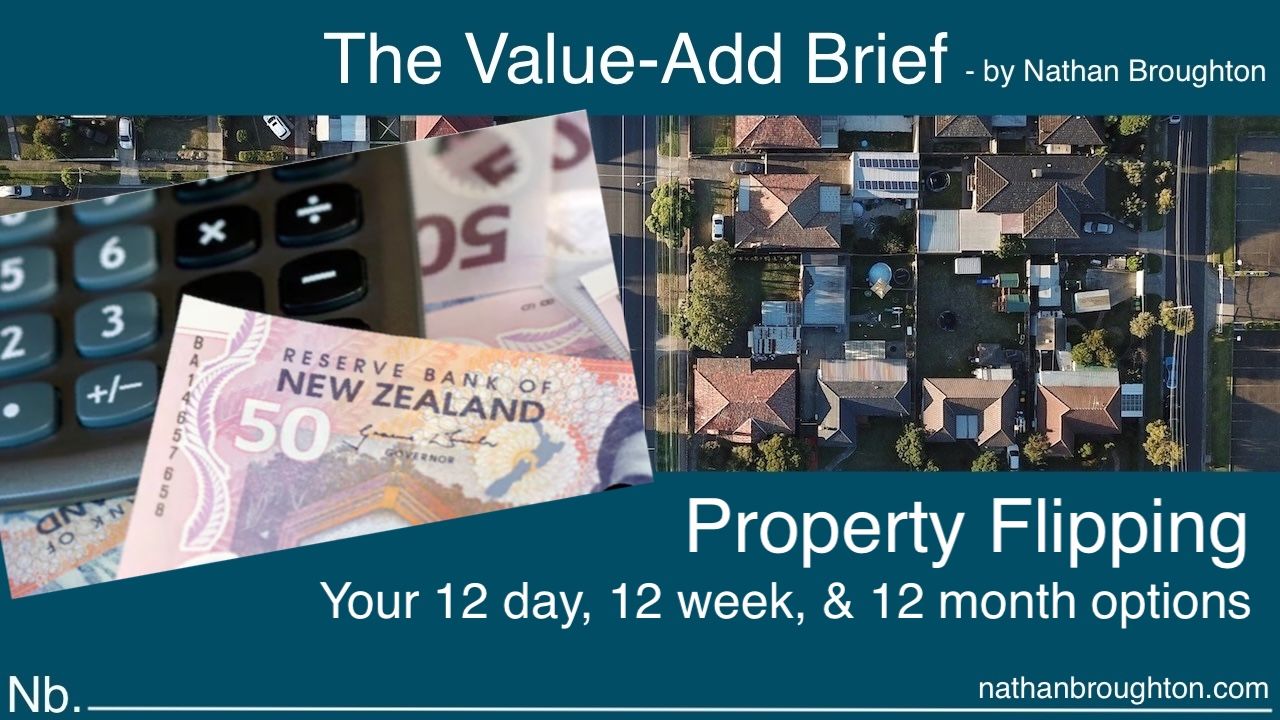
# 06 - Flipping Property: Your 12 Day, 12 Week, & 12 Month Options
When most people hear "flipping," they picture the classic: buy a run-down property, fix it up, sell it for a profit. That's accurate — but it's only one version of flipping.
There are several ways to make a profit through short-term buying and selling of property. And in some cases, you don't even need to buy the property in the first place.
Below I'm outlining three different versions of property flipping. And even within these three, there are multiple ways to tackle each one.
All of them start from the same premise: find a great deal, then sell it on to someone who sees the added value.
Prefer to listen to this information as a podcast ? - its right here
12 Days — Contemporaneous Settlement
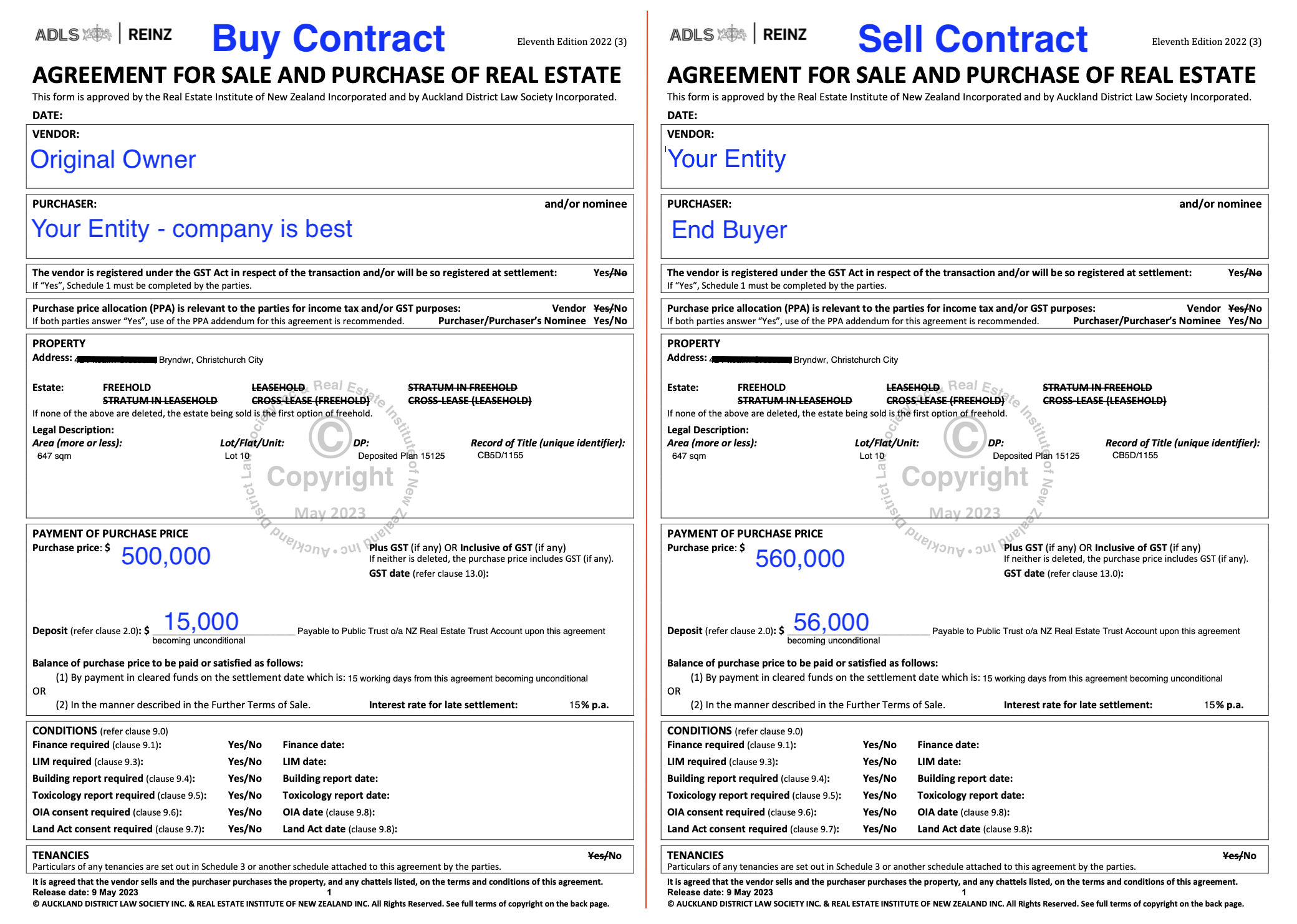
This is the quickest and, for time spent, potentially the most profitable. It's also the hardest to pull together in my opinion.
Sometimes called a double settlement, this is when you get a deal under contract, find a buyer, and sell it to them on the same day you purchase it.
You never actually own the property, so you don't pay for it (except the deposit — and you get that from the end buyer). You don't need to spend on renovations or improvements. You just line up your "buy contract" with your "sell contract."
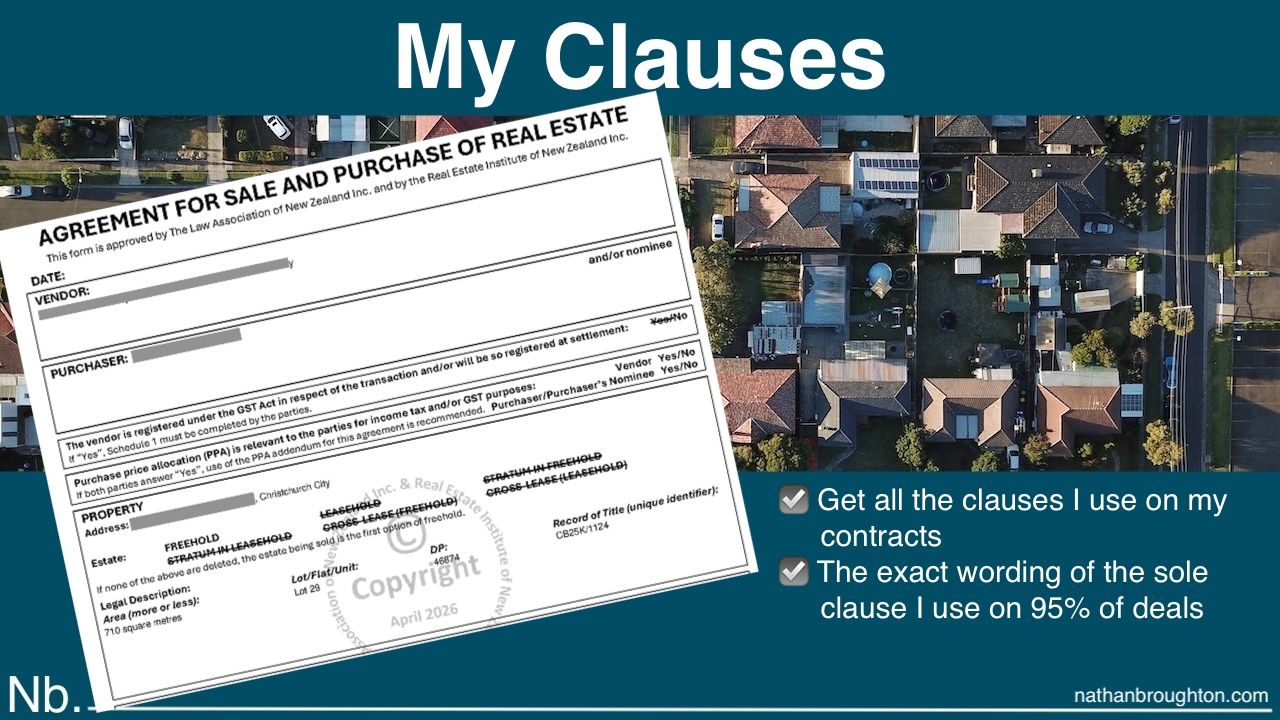
The two contracts need to be mostly identical: same confirmation date, same settlement date, same conditions. The differences are the deposit and the price.
I like to set my buy-contract deposit as low as possible, then set the sell-contract deposit higher — ideally high enough to include as much of the profit we've built into the deal as possible.
So how do you actually make $30,000 to $100,000 profit on this?
Good question. Sounds too good to be true, right?
It's a mixture of finding a great deal, moving fast, seeing value where others don't, and adding a renovation plan that the end buyer can run with. Again, it all comes back to finding a great deal, packaging it up, and on-selling it.
I've found full transparency works best. There's usually a real estate agent in the mix — tell them (within reason) what you're doing, and tell the end buyer too. They'll need to explain this unusual transaction to their lawyer.
Don't forget the costs. You'll have two sets of legal fees (buy and sell), possibly some due diligence reports — building reports, valuations — and you'll definitely owe income tax on the profit, possibly GST as well.
Yes, this can all be done in 12 days. Sometimes even less.
12 Weeks — The Standard Flip
When most people picture a property flip, this is what they have in mind. Buy, renovate, sell for a profit.
A basic flip timeframe looks like this: 4 weeks to find and buy, 4 weeks to renovate, 4 weeks to sell. Total: 12 weeks.
The key here is being able to add far more value than you'd think. A basic paint and new carpet is nowhere near enough.
Adding a bedroom is almost a prerequisite in my book, plus the regular renovation work — kitchen, bathroom, landscaping — on top of paint and carpet.
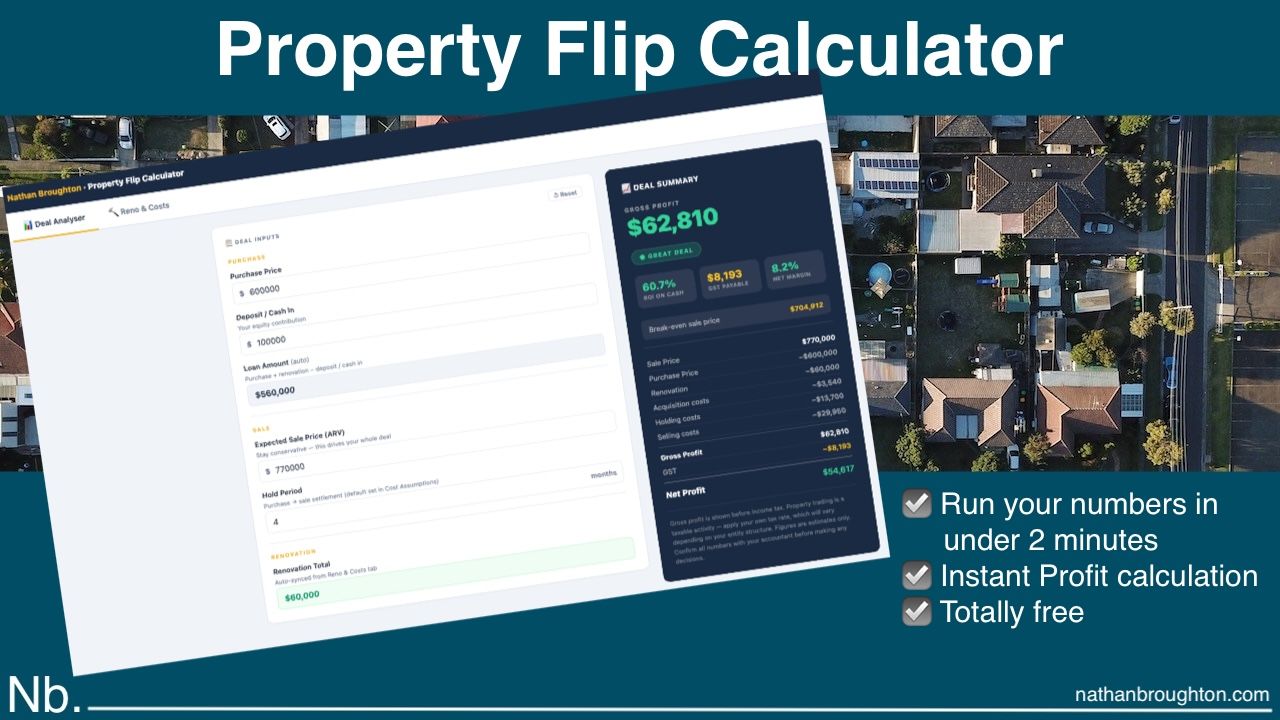
You need to cover the cost of the renovation, the holding costs, two sets of legal fees, and the real estate fees. Plus you're aiming for a profit — remember, this is a business, not a hobby.
You should be aiming for $150,000 to $200,000 minimum between your purchase price and your sell price.
A flip also gives you more scope to get creative with financing. Vendor finance, second-tier lenders, JV finance partners, usable equity, GST refunds, and cash can all play a role in funding the purchase and renovation.
My recommendation for people starting out: aim for $30,000 to $60,000 profit after all costs.
You'll also need to account for income tax and possibly GST. The exact treatment depends on the entity structure you bought in.
12 Months — Subdivision
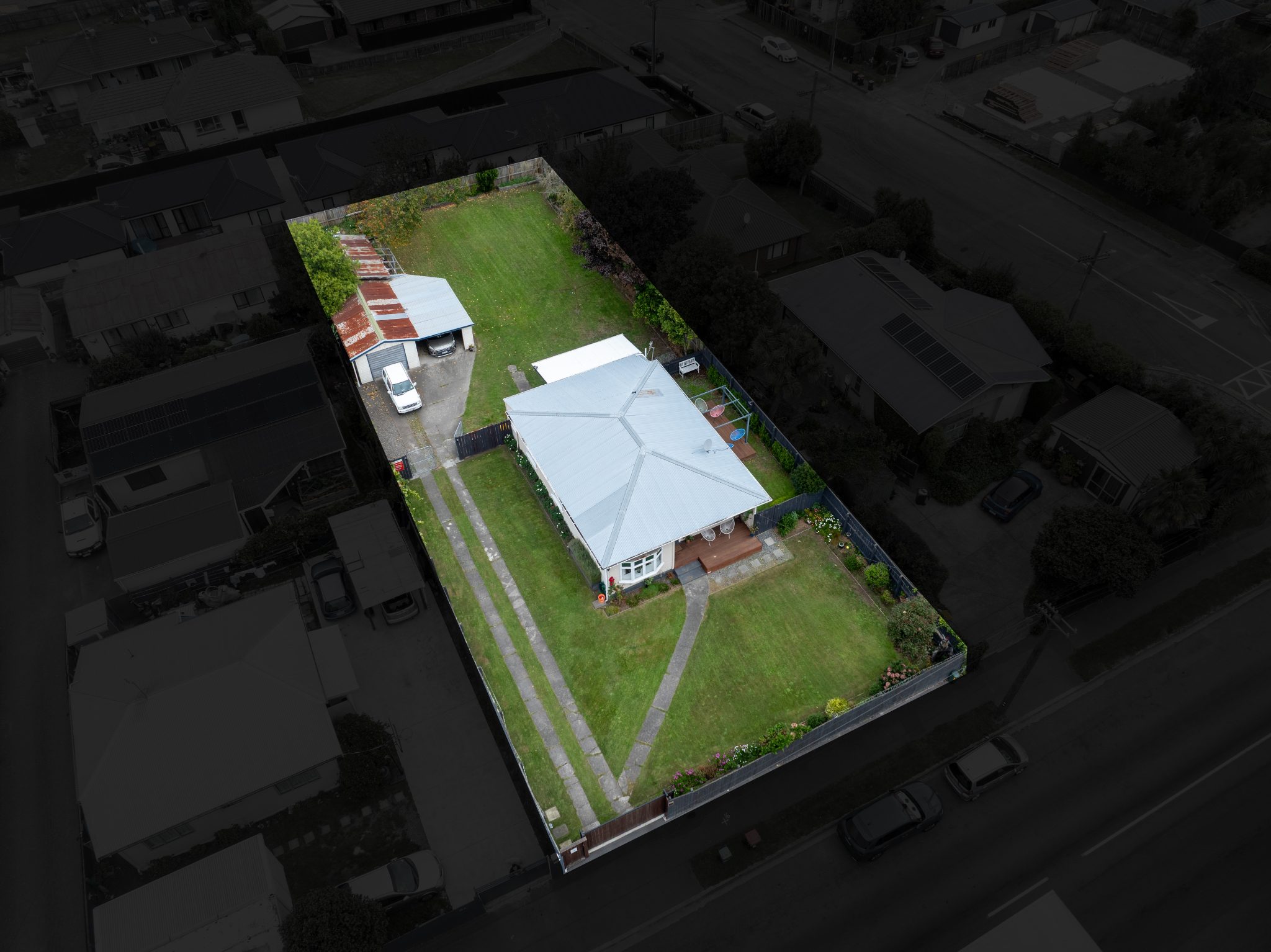
Longest timeframe, and often the highest profit.
There are many versions of a subdivision flip — I'll cover the most basic one here.
You buy a property with a big back yard. You divide off the back yard into its own section, renovate the house (if needed), and sell both.
Each region has its own costs and timeframes. Here in Christchurch, a basic 1-into-2 subdivision will cost $80,000 to $100,000 and take 9 to 12 months.
My rule of thumb: aim to sell the renovated house for roughly what you paid for the whole house-and-land originally. That means you need to buy well.
Often you can rent the house out for holding income, which covers some of the mortgage while the subdivision goes through. I suggest doing the renovation at the end, so you're selling a freshly done-up house.
You need a section big enough to carve another full parcel of land out of it, and the requirements vary by region and zone. In Christchurch you typically need 450 square metres per site to make this work.
I won't go deep into the "how to" here, but get a good surveyor — they'll walk you through what's required in your region.
Keep in mind: you'll have three sets of legal fees on this deal (one buy, two sells), real estate fees on both the house and the section, plus holding costs, reno costs, and subdivision fees. So this can get expensive and take a while. Make sure you've done your numbers and there's actually meaningful profit at the end.
Done well, there's potentially $100,000 to $150,000 profit in a deal like this. And again, don't forget your taxes.
What Next?
So there you have it: 12-day, 12-week, and 12-month property flip deals.
There's clearly profit to be made — but it takes effort and a real understanding of what's required. It sounds straightforward, but there are a lot of things to get right to unlock those levels of profit.
My advice: get as much knowledge as you can before you start. All three options can be profitable — if you do them right.
Want some help building out your own flipping strategy? Book a 1:1 strategy session with me. This 60-minute session runs via Zoom or in person (Christchurch only).
Ready to invest smarter?
Join 1000+ New Zealanders getting straight-talking property advice every week.
Free. No spam. Unsubscribe anytime.